



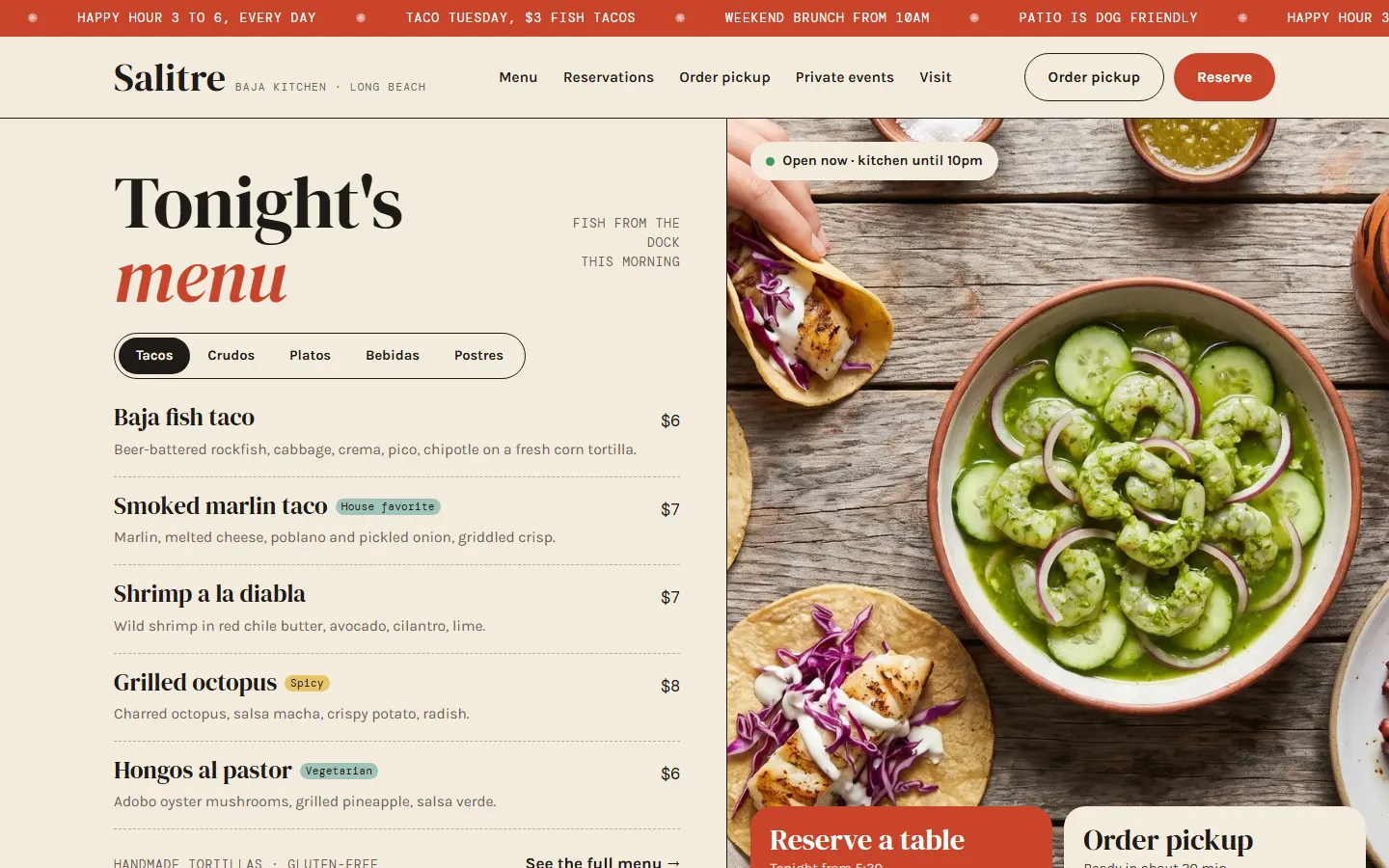


Google profile
A profile that gets the tap.
Restaurants
Food cost drift, buried catering inquiries and hours that read wrong online.
Free 20-minute call. No financial records needed.
Updated
A restaurant usually loses time retyping vendor invoices and schedules, money when food costs rise faster than menu prices, leads when catering and private event inquiries sit in a shared inbox, and visibility when hours and menus read differently on Google, delivery apps and AI answers. French Press Labs builds catering inquiry capture with follow-up, vendor invoice matching to your books, a cost by dish dashboard and one source for hours and menus. The path in is a free 20-minute fit call, then a Business Performance Diagnostic of your sales, cost and booking records.
best tacos near me
restaurants open late near me
brunch with outdoor seating near me
private dining room near me
office lunch catering near me
People type these into Google and ask them of AI assistants. What happens after they reach you matters just as much.
Where it slips
Managers key vendor invoices, schedule swaps and menu changes into the POS, the books and the delivery apps, one system at a time.

Produce and protein prices move weekly while menu prices sit still, so the dishes that lost margin only show up when the month closes.
Catering orders and private event requests land in a shared inbox or a voicemail box during service, and nobody owns the callback.

Holiday hours, the current menu and review replies differ across Google, delivery apps and AI answers about where to eat tonight.
Part of Demand
Assistants name local businesses in their answers. Being named is one part of Demand, and only pays off when the inquiry reaches a person.
Example of the answer a customer could get, with your business named in it.
One business, three layers
We start with the leak that costs you the most and build the fix where it belongs. A website is one part of Demand, not the whole answer.
Catering and event inquiries reach the person who books them while the kitchen is busy. Your Google profile, reviews, AI search answers and website show the same hours and the menu you actually serve.
Vendor invoices read into your records instead of being typed, event orders move from inquiry to deposit to prep on one board, and menu prices come from one source across the POS, site and delivery apps where they allow it.

A dashboard from your POS and invoices shows cost by dish, sales by daypart and catering revenue, so menu decisions happen before the month closes.
Runs in our own business
Matching charges to the books with the owner approving, and follow-up that stops when a customer replies, both run in our own business before we build them for a restaurant.
Part of Demand
When someone nearby searches “best tacos near me”, your name should be one they see, and the inquiry should land with a person.
Example of what nearby customers would see, with your business in the results.
How it starts
A free fit call first. Then the Business Performance Diagnostic looks inside your records and workflows and hands you a baseline and a ranked list of fixes to keep.
POS sales by item and daypart. Vendor invoices and price changes. Labor schedules and timecards. Catering and event inquiries with their outcome.
Catering inquiry to deposit to delivery. Vendor invoice to the books. Menu change to every channel.
We name the restaurants that show up first when people near you search or ask an AI assistant for your cuisine and for catering, and compare how each one is described.
Concepts we made to show the idea. Not client work.
Google profile
Reviews
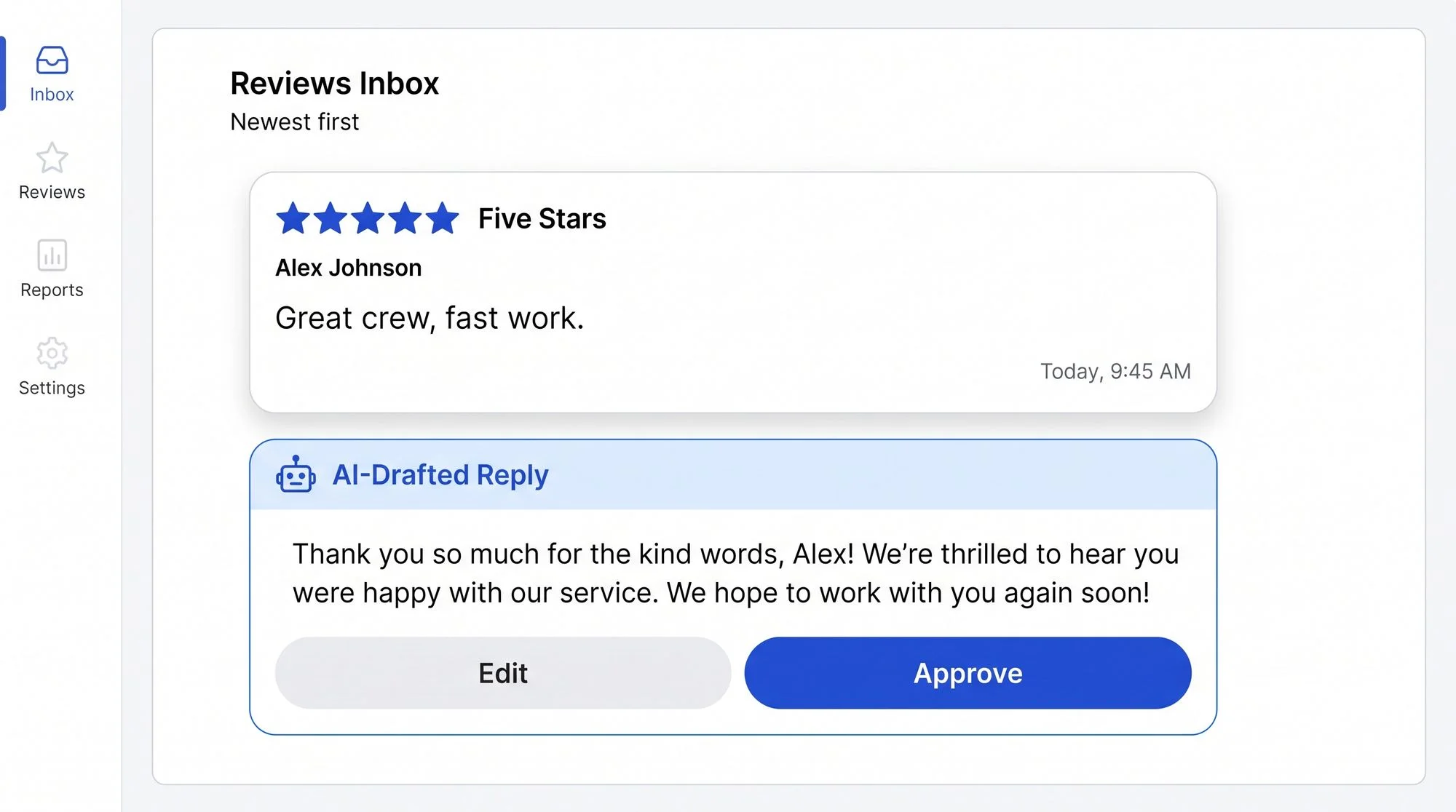
The invoice that raised chicken prices was paid weeks before anyone repriced the dish. By then the margin on it is gone.
When the person who handles events is off, inquiries wait and quotes go out with no follow-up behind them.
Google says open, the delivery app says closed and the site still lists last year's holiday hours. Diners believe whichever they see first.
Shifts get copied from last month's schedule instead of built from sales by daypart, so a slow lunch carries the same crew as a busy one.
Send every catering and event request, from the phone, the site and email, into one queue with a named owner. Then give each quote a follow-up that stops the moment the customer replies. Lost catering is often not a no, it is an inquiry nobody answered during service. A simple board from inquiry to deposit shows what is still open.
Track cost by dish, sales by daypart, labor hours against sales, and catering revenue with what is still pending. Those four tell you which items to reprice and which shifts to trim. The numbers should come from your POS and vendor invoices, not a spreadsheet someone fills in on Sunday. A weekly look often catches a price change before it eats a month.
Often, yes. Invoices from email or photos can be read into your records, and a person approves each match instead of typing it. Where your accounting software allows it, the line items also feed cost by dish. The shop we run uses the same approve-instead-of-type approach for its own books.
Have each reply drafted from the review itself and approved by a manager in a minute. Answer the specific complaint or compliment, not with a stock line. Diners read the replies as closely as the reviews. Reviews that name a real problem can also be routed to the kitchen or the front of house lead.
Keep one source for hours and menus, and push changes from it to every listing you control. Check holiday hours before each holiday, not after a complaint. AI assistants often draw on those same listings and reviews, so consistency there is what they tend to repeat.
It starts with a free 20-minute fit call, with no financial records needed. If there is a fit, the Business Performance Diagnostic looks at your POS data, invoices, schedules and catering path. You get a baseline, ranked fixes, a roadmap and a comparison with nearby competitors. Accounts we set up stay in your name.


