



Search
Pages that show up nearby.
Real estate agents
Portal inquiries, long timelines and past clients who never hear back.
Free 20-minute call. No financial records needed.
Updated
A real estate agent or small team usually loses time tracking transaction deadlines across email and texts, money on lead sources that never close, leads when portal inquiries wait during showings and past clients go quiet, and visibility when neighborhoods and reviews read differently online. French Press Labs builds one inquiry inbox with fast routing, long-timeline follow-up that stops on reply, a transaction deadline board, past client check-ins and a closed deals by source dashboard. Agents begin with a free 20-minute fit call, then a diagnostic of their pipeline.
real estate agent near me
best realtor in near me
homes for sale in [neighborhood]
what is my home worth near me
listing agent near me
People type these into Google and ask them of AI assistants. What happens after they reach you matters just as much.
Where it slips

Inspection, appraisal and loan contingency dates live in email threads and a notes app, and client updates get typed out one text at a time.

Portal fees, mailers and boosted listings get paid every month, but nobody ties them to closed deals, so the best source is a hunch.

An inquiry from a portal or your site waits while you are in a showing, and a seller who plans to list next year gets one email and then silence.

The neighborhoods you work, your recent sales and your reviews tell different stories on Google, portals, your brokerage page and AI answers.
Part of Demand
Assistants name local businesses in their answers. Being named is one part of Demand, and only pays off when the inquiry reaches a person.
Example of the answer a customer could get, with your business named in it.
One business, three layers
We start with the leak that costs you the most and build the fix where it belongs. A website is one part of Demand, not the whole answer.

Inquiries from portals, your site, open houses and referrals land in one inbox and reach you or a teammate fast. Your profiles and AI search answers show the areas you know, written to fair housing rules.

Buyers and sellers who are months out get steady follow-up that stops when they reply, and each deal moves through its deadlines on one board everyone on the team can see.

You see deals by stage, closings expected this quarter, cost per closed deal by source and past clients due for a check-in.
Runs in our own business
One inbox with replies a person approves and follow-up that ends when someone answers is how our own business handles inquiries, and it fits an agent juggling portals and showings.
Part of Demand
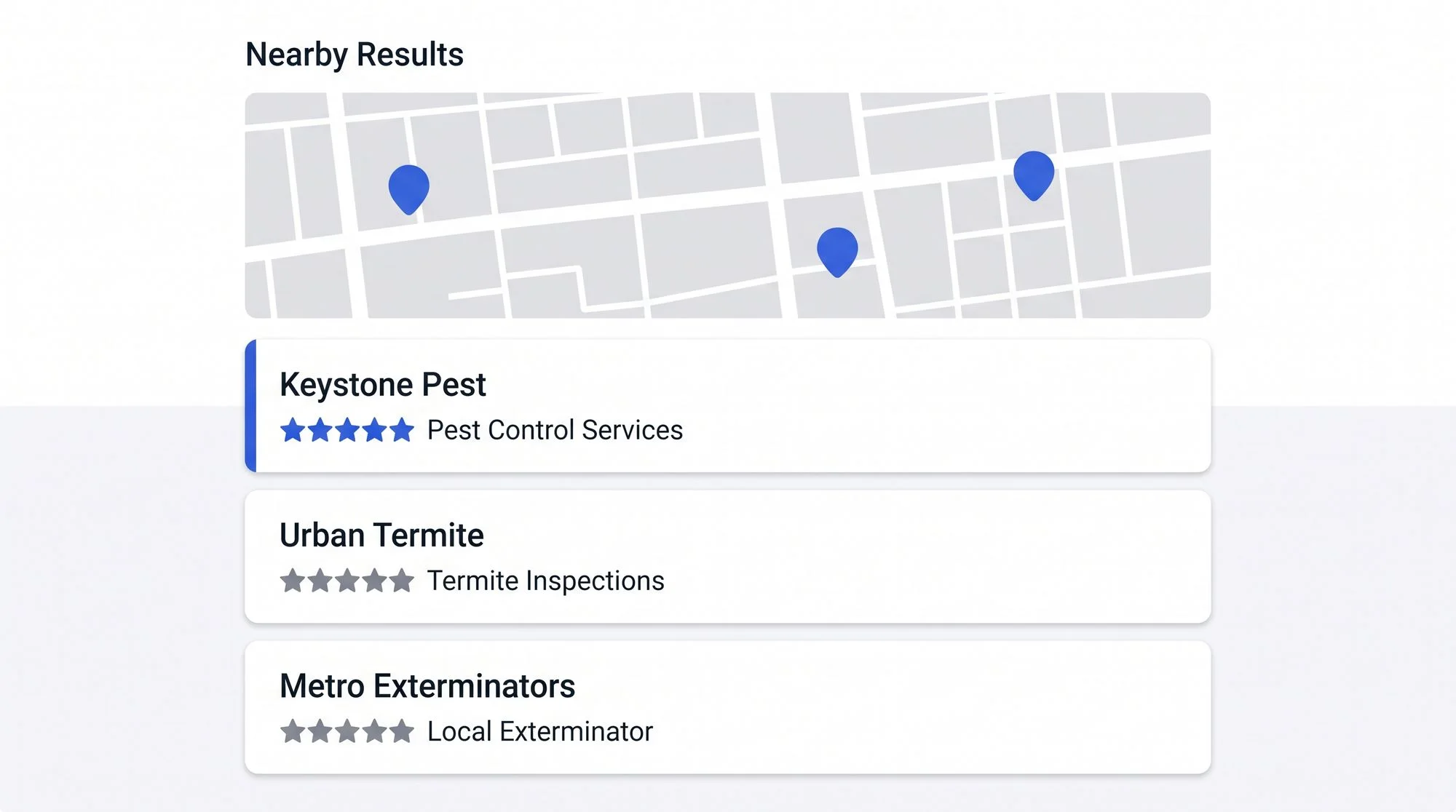
When someone nearby searches “real estate agent near me”, your name should be one they see, and the inquiry should land with a person.
Example of what nearby customers would see, with your business in the results.
How it starts
A free fit call first. Then the Business Performance Diagnostic looks inside your records and workflows and hands you a baseline and a ranked list of fixes to keep.
CRM or contact database exports. Lead source records by portal and channel. Transaction files and closing dates. Marketing spend by source.
Inquiry to first conversation. Contract to closing deadlines. Closing to next referral.
We name the three agents or teams that come up first when someone searches for a realtor in your main neighborhoods, and compare how AI assistants and the portals describe them next to you.
Concepts we made to show the idea. Not client work.
Search
AI search

A buyer messages three agents from a portal while you are showing a house, and the one who answers first gets the tour.
Sellers who are far from ready get a single email, then hear from whoever mails them a postcard closer to the date.
Contingency, appraisal and closing dates are spread across threads, and one missed date can put a deal at risk.
Portal and ad bills keep renewing because nobody can say which source produced the commissions.
Put every portal, website and open house inquiry into one inbox that alerts you or a teammate right away, with a short reply drafted for a person to approve and send. That way a buyer gets a real answer while you are still at the property. Anything about pricing or advice stays with you. Fair housing rules apply to every message.
Watch deals by stage, closings expected this quarter, response time to new inquiries and closed deals by lead source. Add past clients due for a check-in, since referrals tend to come from them. Those numbers tell you which sources to keep paying for and where next quarter's income stands. We build them from your CRM and transaction records.
Set a steady, useful check-in schedule for each lead based on their timing, and stop it as soon as they reply so a person takes over. Market updates for their area beat generic newsletters. The point is to still be the agent they remember when they are ready. We run this stop-on-reply follow-up in our own business.
Put every deal on one board with its contingency, appraisal, loan and closing dates, and send reminders before each one. Clients get a short update at each milestone, so they stop texting for status. Everyone on the team sees the same board. It replaces the notes app and the calendar reminders scattered across phones.
Assistants repeat what they can find consistently: the neighborhoods you work, recent sales, reviews, license and brokerage. If your profiles disagree or say little, another agent gets named. We compare how assistants describe you and the agents near you, then fix the facts at the source, written to fair housing rules. No one can promise placement.
Grab a free 20-minute fit call on the booking page. We look at your AI visibility snapshot, name the agents you compete with and find one problem worth a closer look. If it fits, the diagnostic looks inside your lead sources, CRM and transaction records and gives you a baseline, ranked fixes and a roadmap to keep. Accounts stay in your name.


