



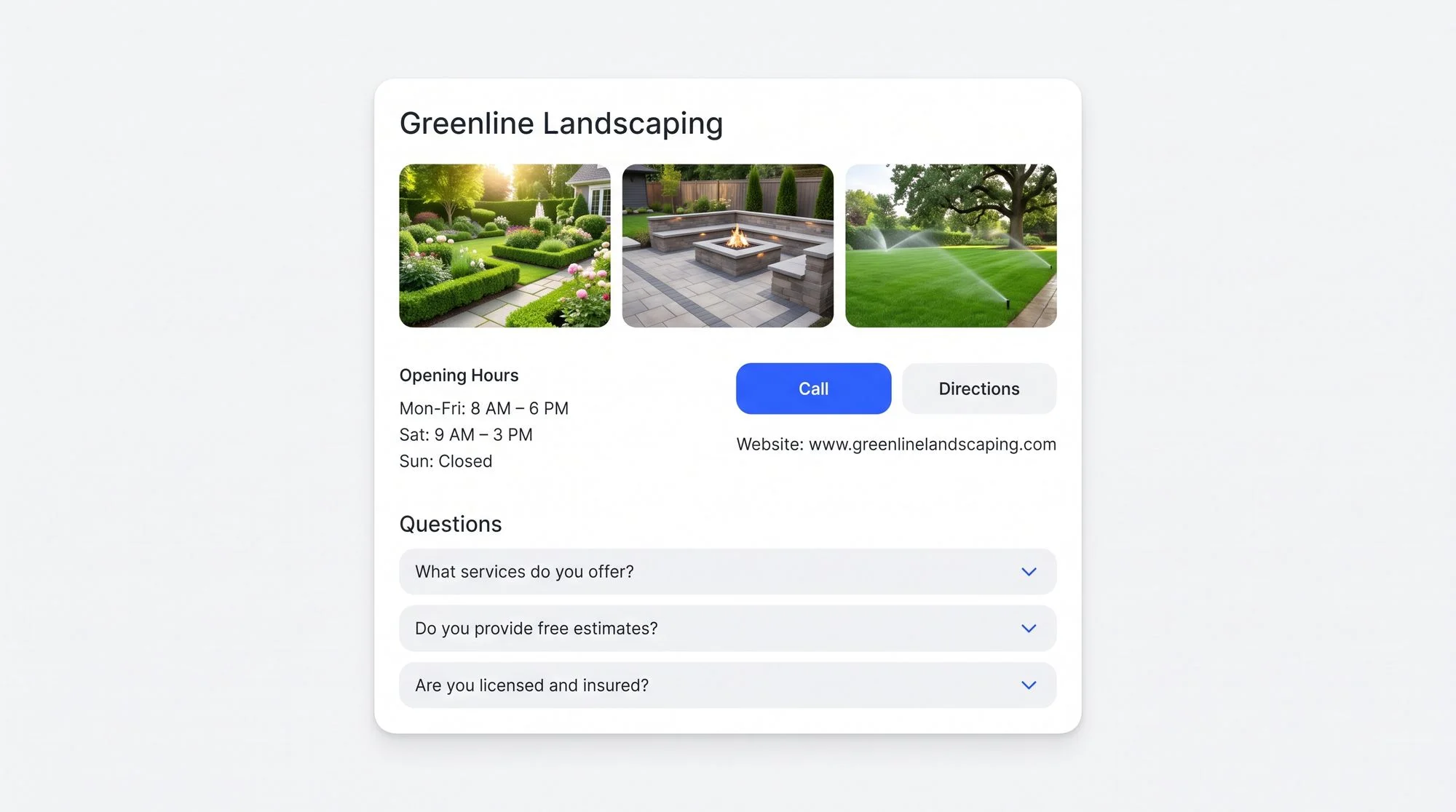
Google profile
A profile that gets the tap.
Nail salons
Add-ons priced by memory, walk-ins mixed with bookings and one-visit clients.
Free 20-minute call. No financial records needed.
Updated
A nail salon usually loses time when bookings, walk-ins and DMs pile up at the front desk, money when nail art, length and removal add-ons are priced differently by each tech, leads when first-time clients never get a reason to return, and visibility when prices and languages spoken differ online. French Press Labs builds one service price list for every channel, a desk queue for walk-ins and bookings, first-visit rebooking texts in the client's language and a revenue by tech dashboard. The first step is a free 20-minute fit call, then the diagnostic.
nail salon near me
gel manicure near me
acrylic nails walk in near me
nail art near me
pedicure open sunday near me
People type these into Google and ask them of AI assistants. What happens after they reach you matters just as much.
Where it slips
The front desk juggles walk-ins, phone bookings and Instagram DMs at once, and fills get squeezed in by hand around full sets.

Nail art, extra length, gel removal and French tips get charged differently by each tech, and gel, powder and polish costs never get tied to the services that use them.
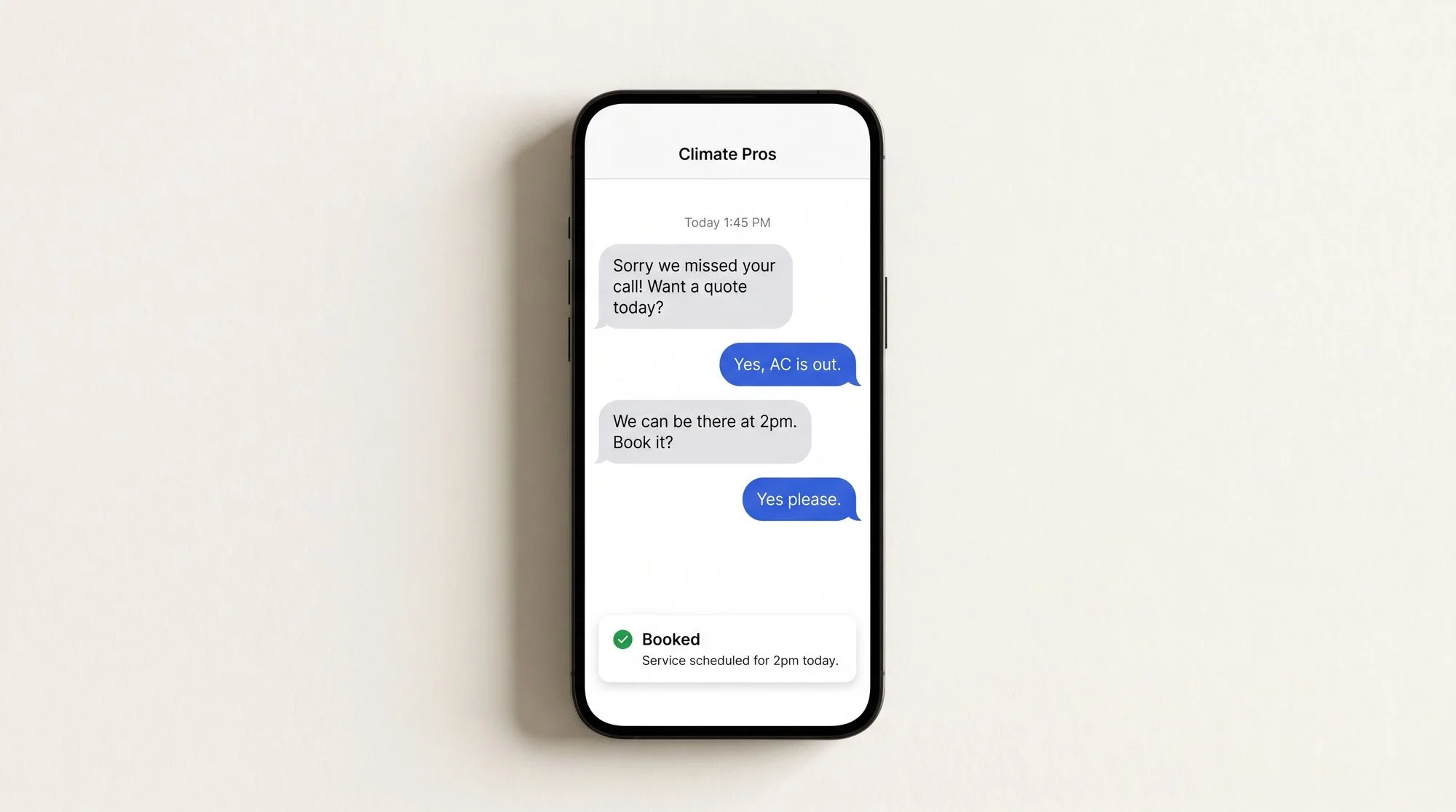
First-time clients leave with a nice set and no rebooking prompt, and group requests for bridal parties or birthdays wait in DMs until someone has a free hand.

Prices, languages spoken and whether you take pedicure walk-ins read differently on Google, social profiles and AI answers.
Part of Demand
Assistants name local businesses in their answers. Being named is one part of Demand, and only pays off when the inquiry reaches a person.
Example of the answer a customer could get, with your business named in it.
One business, three layers
We start with the leak that costs you the most and build the fix where it belongs. A website is one part of Demand, not the whole answer.

Booking requests from DMs, texts and calls land in one queue, group bookings reach someone who can plan stations, and your Google profile, reviews and AI search answers show real prices and the languages your team speaks.
One service and add-on price list feeds the booking app, the site and the register, fills get booked on the right interval, and first-time clients get a rebooking text in the language they prefer.

See revenue by tech, service and add-on, supply cost against services done, and which stations sit idle on weekday afternoons.
Runs in our own business
One price source feeding every channel runs in our own business, and it is the same fix for a nail salon whose add-ons cost one thing on the menu and another at the chair.
Part of Demand
When someone nearby searches “gel manicure near me”, your name should be one they see, and the inquiry should land with a person.
Example of what nearby customers would see, with your business in the results.
How it starts
A free fit call first. Then the Business Performance Diagnostic looks inside your records and workflows and hands you a baseline and a ranked list of fixes to keep.
Bookings and walk-ins by tech. Service menu and add-on charges. Supply invoices for gel, acrylic and polish. Tips and commission payouts.
DM or walk-in to seated client. Checkout to rebooked fill. Supply order to service cost.
We name the nail salons that appear first for searches like gel manicure or pedicure near you, and compare the prices they show, their photos, their reviews and how AI assistants describe them.
Concepts we made to show the idea. Not client work.
Google profile
Call capture
Reviews
One tech charges for art on two nails, another throws it in. The menu, the booking app and the register all say something different.
Clients come back late for a fill and the appointment runs long, or they never come back because nobody prompted them.
Gel, powder and tips get reordered when a shelf looks empty. Nobody can say which services the supply spend actually supports.
A bridal party asks for pedicures together on a Saturday, the message sits for a day, and they book with a salon that answered.
Send a rebooking text a few days after the first visit, timed to when a fill or a new set would be due. Write it in the language the client chose and include a booking link. Make the next appointment easy to book at checkout too. Track how many first-time clients rebook so you know whether it's working.
Put every add-on on one price list and have the booking app, the register and the site read from it. Decide what counts as nail art, extra length or removal so every tech charges the same way. Inconsistent add-ons quietly cost the salon money. They also confuse clients who compare receipts with a friend.
Track revenue by tech and service, add-on charges, first-time clients who rebooked, and supply spend against services done. Add idle station hours so you can see which afternoons to promote. These should come from your booking and register records. Looking weekly lets you fix pricing drift before it becomes habit.
Run one queue at the front desk that shows booked clients and walk-ins together, with each tech's next open slot. Walk-ins can get a text when a station frees up instead of standing at the counter. Pedicure chairs and manicure tables get tracked separately because they free up at different times. The desk stops guessing who goes next.
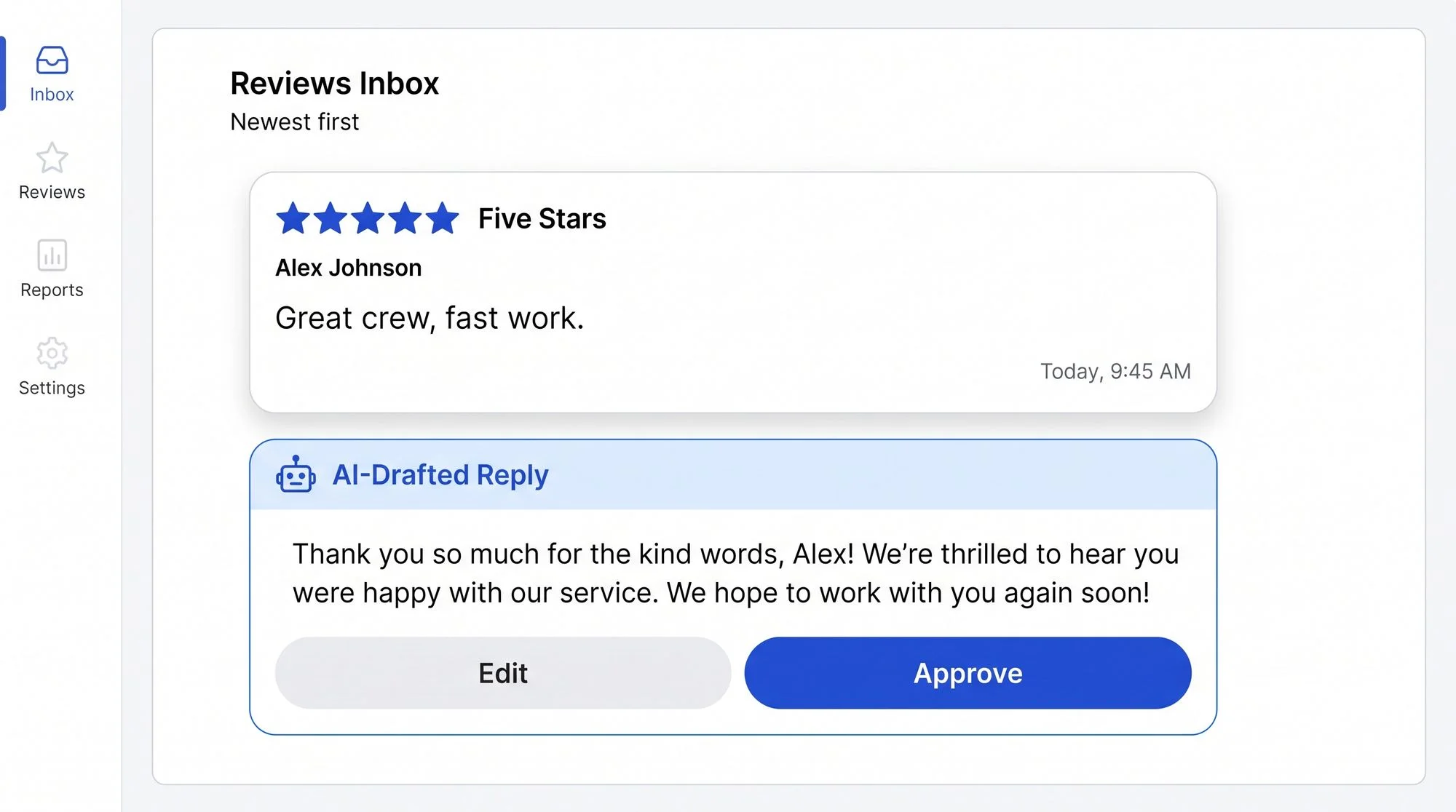
Yes. Reminders, rebooking texts and review requests can go out in the language each client chose. Your Google profile and site can list the languages your team speaks, which AI assistants can repeat when someone asks. Replies to messages can be drafted in either language for staff to approve before sending.
A nail salon starts the way every owner does with us, on a free 20-minute fit call. If it fits, the Business Performance Diagnostic reviews your bookings, price list, supply invoices and how new clients find you. It returns a baseline, ranked fixes and a roadmap, plus a look at the salons near you that clients compare you with. What we set up stays in your name.


