



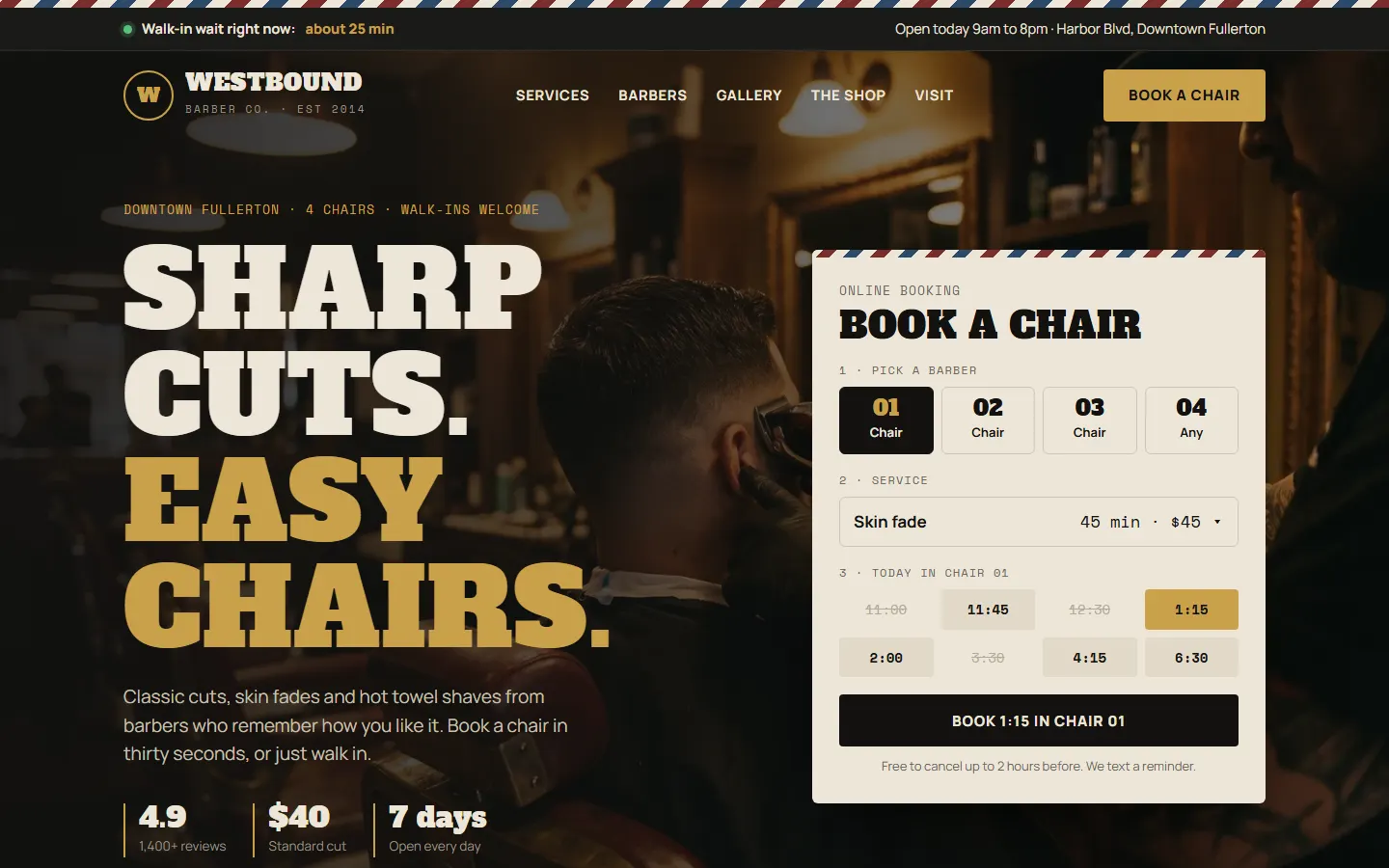


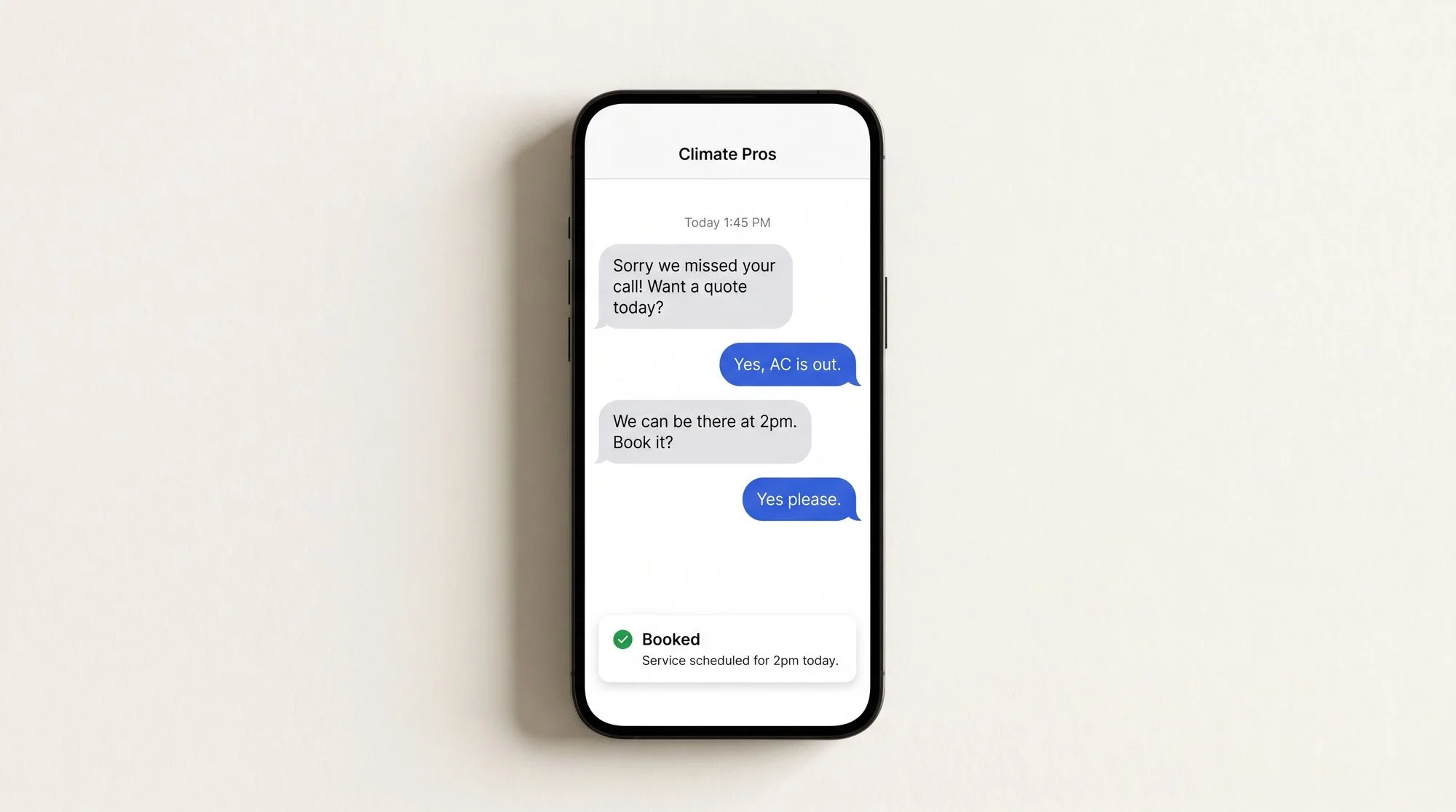
Call capture
Every call answered, day or night.
Barbers
Walk-in lines, empty booked slots and regulars who quietly switch shops.
Free 20-minute call. No financial records needed.
Updated
A barbershop usually loses time juggling bookings across texts, DMs and each barber's app, money on no-shows and open chairs nobody sees coming, leads when walk-ins leave a long line, and visibility when Sunday hours and walk-in rules differ online. French Press Labs builds one booking inbox, a walk-in wait list by text, lapsed-regular nudges timed to each client's usual cut, and a chair use dashboard by barber. It begins with a free 20-minute fit call, then a Business Performance Diagnostic.
barber near me open sunday
skin fade near me
walk-in barbershop near me
kids haircut barber near me
beard trim and lineup near me
People type these into Google and ask them of AI assistants. What happens after they reach you matters just as much.
Where it slips
Bookings arrive by text, Instagram DM, phone and each barber's own app, and someone reconciles the shop calendar by hand between cuts.
No-shows on a fade slot leave a chair idle, and with booth renters and commission barbers mixed, the shop rarely sees its real chair use.
Walk-ins see a full waiting bench and leave, and a regular who used to come every few weeks drifts to another shop without a word.
Sunday hours, walk-in policy and which barber does skin fades or kids cuts read differently on Google, Instagram and AI answers.
Part of Demand
Assistants name local businesses in their answers. Being named is one part of Demand, and only pays off when the inquiry reaches a person.
Example of the answer a customer could get, with your business named in it.
One business, three layers
We start with the leak that costs you the most and build the fix where it belongs. A website is one part of Demand, not the whole answer.
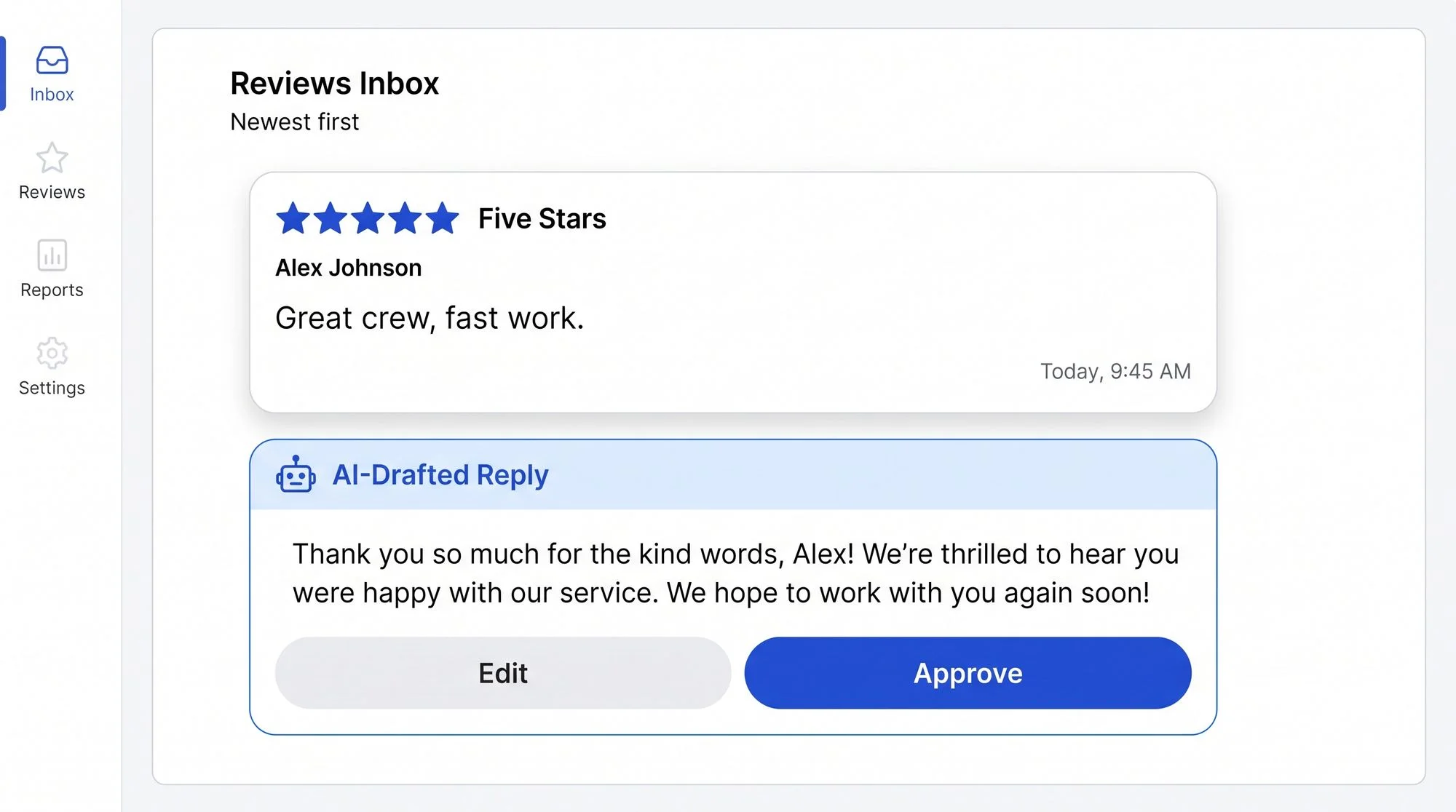
Texts, DMs and calls land in one booking inbox, walk-ins can join a wait list by text, and your Google profile, reviews and AI search answers say plainly when you take walk-ins.
Reminders and an easy reschedule link protect booked chairs, and regulars who pass their usual interval get a nudge from their own barber.

See chair use by barber and hour, no-show trends and which regulars have gone quiet, without asking each barber for their numbers.
Runs in our own business
One inbox where every message gets an owner runs in our own business, and it is what keeps a barbershop's DMs from waiting while everyone is cutting.
Part of Demand
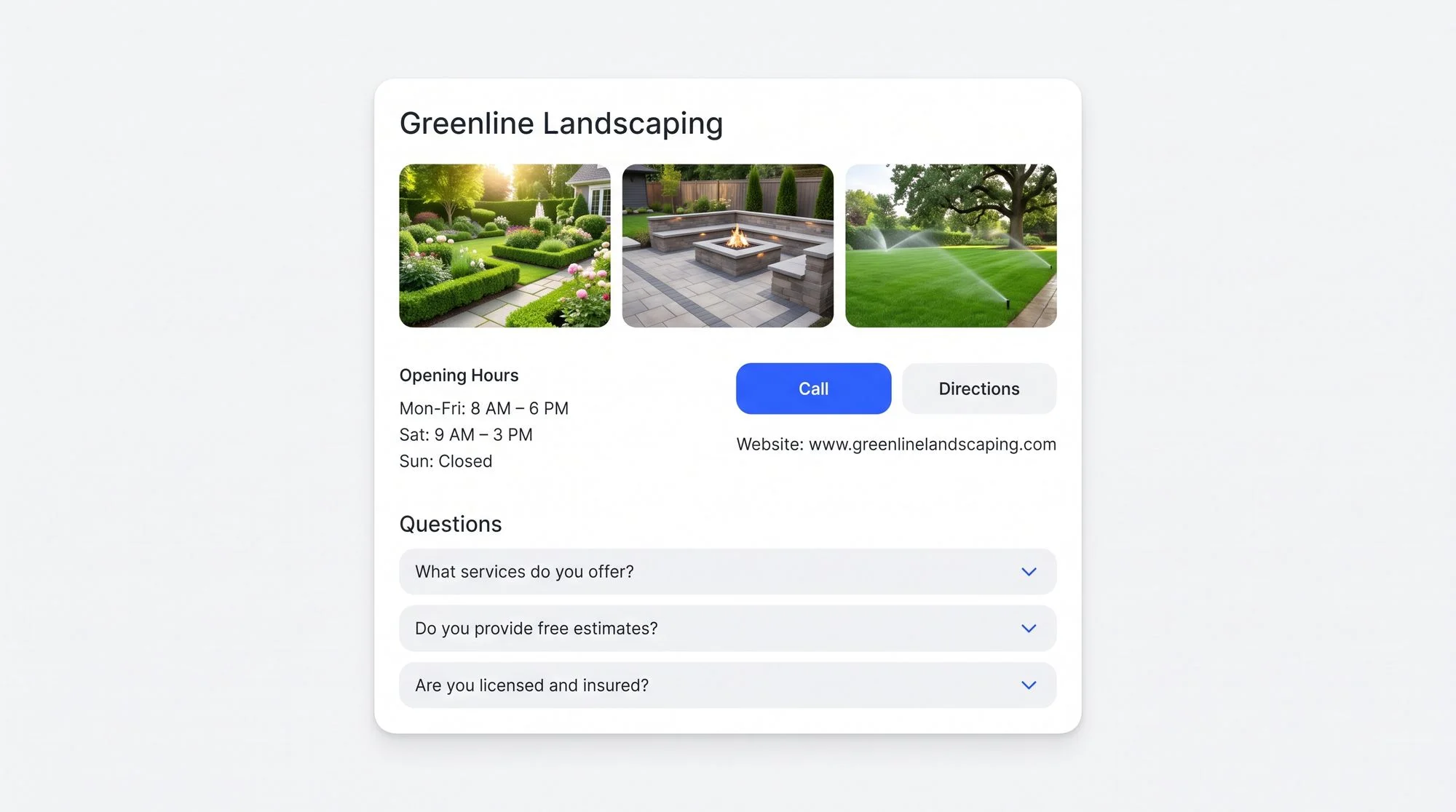
When someone nearby searches “barber near me open sunday”, your name should be one they see, and the inquiry should land with a person.
Example of what nearby customers would see, with your business in the results.
How it starts
A free fit call first. Then the Business Performance Diagnostic looks inside your records and workflows and hands you a baseline and a ranked list of fixes to keep.
Booking history and no-shows by barber. Walk-in counts or sign-in sheets. Card, cash and tip records. Booth rent and commission agreements.
Message or walk-in to seated client. Checkout to next booking. Lapsed client to rebooked.
We name the barbershops that come up first for "barber near me open Sunday" and for the styles you cut, and compare how Google and AI assistants describe each one.
Concepts we made to show the idea. Not client work.
Call capture
Google profile
Reviews
Each chair uses its own app or texts, so the shop can't see open slots across the floor or send a walk-in to the next free barber.
A full bench at lunch looks like a long wait. Without a text wait list, those clients just try the next shop down the street.
A client who came in every few weeks skips one visit, then two. Nobody notices until the barber wonders where they went.
Cash cuts, card tips and booth rent sit in different places, so the owner guesses at what the shop actually took in.
Send a reminder the day before and a short one the morning of, each with a one-tap reschedule link. A client who can move a slot easily is less likely to skip it. If your booking app supports deposits, use them for prime slots like Saturday mornings. Track no-shows by barber and time so you can see where the problem actually sits.
Give them a text wait list so they can step out and come back when a chair opens. Show the walk-in policy and the current wait on Google and your booking page where your software allows. People leave a full bench because they can't tell how long it is. A text saying they are next gives them a reason to return.
Track chair use by barber and hour, no-shows, walk-ins turned away, and regulars who have passed their usual interval. Those show whether you need another barber, different hours or better reminders. Pull them from the booking system and your card records, not memory. A short weekly view beats a monthly guess.
Flag anyone who has gone well past their usual gap between cuts and send a short note from their own barber. Keep it personal and include a booking link. Don't blast the whole list with a discount. A quiet nudge timed to the client's own pattern feels like the barber noticed, because they did.
Often, yes. Texts, DMs and calls can land in one inbox where each message gets an owner, and many booking apps can share calendars with a shop view. Where an app doesn't allow that, we build the closest workable view and say so up front. The goal is one place to see every open chair.
First comes a free 20-minute fit call, no records needed. Next, the Business Performance Diagnostic looks at your booking history, walk-in flow, payments and how clients find you. It ends with a baseline, a ranked list of fixes, a roadmap and an appendix on the shops you compete with. Any accounts we create are kept in your name.


