Trades · 5 min read
Electrical work feels risky to homeowners. The right trust signals, starting with a license number they can check, make calling you the easy choice.
French Press Labs · Updated
The short answer
An electrician builds trust online by showing a license number that customers can verify with the state board, proof of insurance, photos of real jobs and crew, recent reviews that mention specific work, and a clear name behind the business. These signals should appear as plain text near every call button, so a nervous homeowner can check them in seconds.
In this article ›
Why do electricians need stronger trust signals than most trades?
Electrical work feels dangerous to homeowners, and it is. A bad panel job can start a fire. Many people also know that unlicensed work can cause trouble with permits, insurance claims and selling a home later.
So the question in a homeowner's head is not just "can they come today." It is "are they qualified, and will this be done right." Your website has to answer that before they call, usually in under a minute, often on a phone.
What does a verifiable license look like on a website?
"Licensed and insured" is a phrase every contractor uses. It means little on its own. What builds trust is a license number someone can check.
- Show the number as text. For example: "California license #000000, C-10 Electrical." Put it in the footer of every page and near the call button on key pages.
- Link to the lookup. In California, homeowners can verify a contractor with the Contractors State License Board. Other states have their own boards. Linking to the lookup shows you expect to be checked.
- Name the classification. Customers may not know what C-10 means, so add a short line that says it covers electrical work.
- Keep it consistent. The same number, business name and address on your site, Google Business Profile and directories.
That consistency also helps search engines and AI assistants match your business to the right facts. We cover the structured data side in our schema checklist for contractors.
What other proof matters to homeowners?
After the license, a few signals do most of the work.
Insurance. Say what you carry in plain words, like general liability and workers' compensation, and offer a certificate on request.
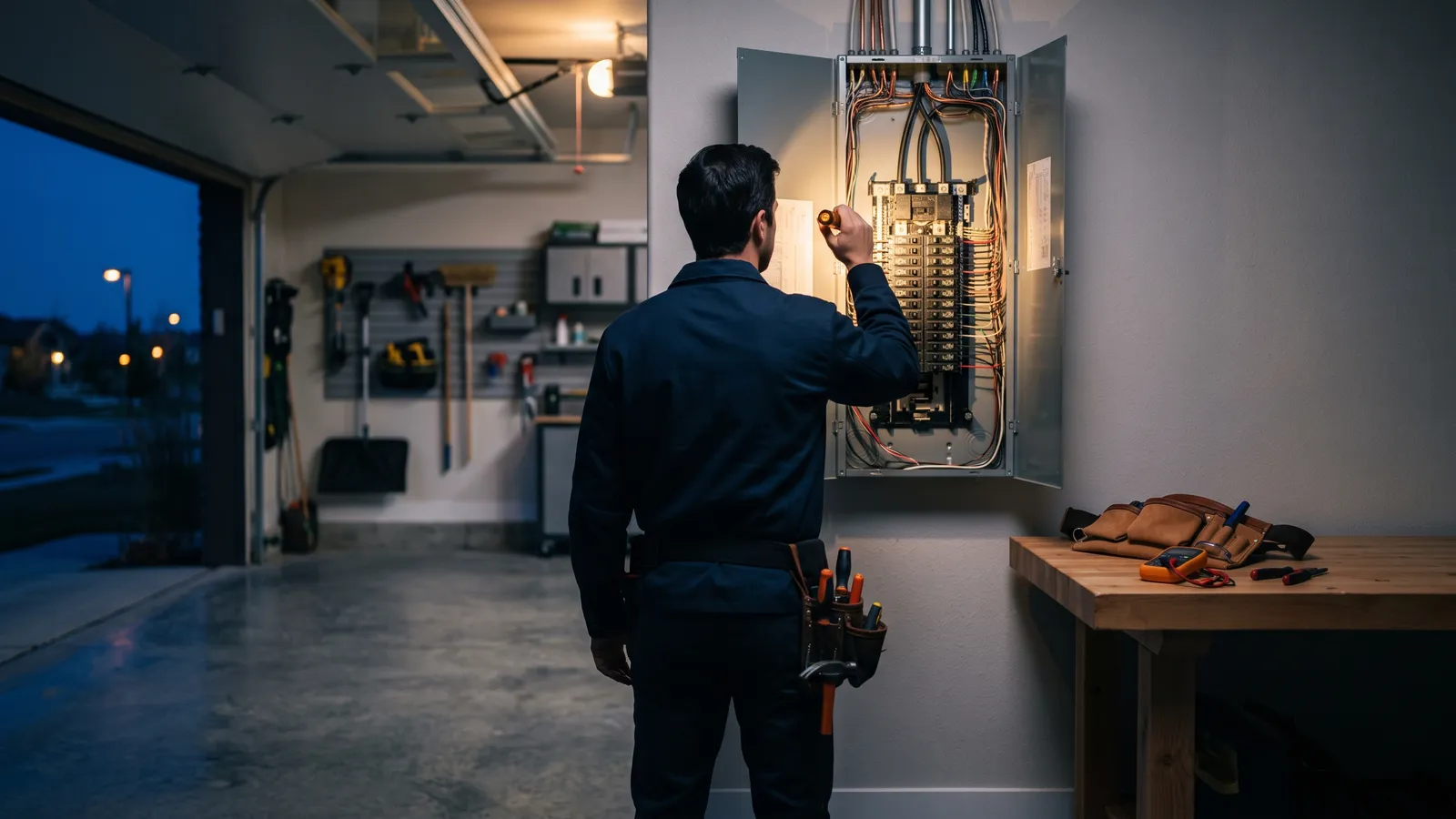
Real photos. Pictures of your own trucks, your crew from behind or at work, and finished panels, chargers and lighting jobs. Stock photos are easy to spot, and they quietly say "we have nothing to show."
Specific reviews. A review that says "replaced our 100 amp panel and handled the permit" does more than ten reviews that say "great service." Ask happy customers to mention the job.
A named owner. Many homeowners prefer an owner-operated shop. If the owner is on the job, say so, and show it.
Permits. Say that you pull permits where required and explain what that means for the customer. It answers a question they may be afraid to ask.
How did one electrician put this into practice?
EZ Power & Light is an owner-operated electrician in Southern California. Its reputation was strong, but it had no site built to be found across its service area.
The site we built leads with what sets the business apart: the owner shows up on the job. It covers Los Angeles, Orange and Ventura counties with more than 45 city pages, so each area gets a page of its own instead of a single "areas we serve" list. The specialties that carry the most weight, EV chargers, panel upgrades, generators and emergency service, each have a dedicated page.
Every page offers two clear next steps. Call now for emergencies. Request a quote for planned work. That split matters. A homeowner with a dead panel and a homeowner planning an EV charger are in very different moods, and the site meets both.
Which pages help an electrician look credible?
A credible electrician site usually includes:
- Service pages for the work you want more of, like panel upgrades, EV charger installs, generators, rewiring and lighting.
- An emergency page that says when you answer and what you can fix on the spot.
- City pages for the areas you really serve, each with local details. See our guide to city pages that don't get flagged as spam.
- An about page with the owner, the license, the insurance and how long you have been working.
- A reviews page with real customer words and job photos.
You can see how we approach this on our electrician page.
What should an electrician avoid?
- Badges with no source. "Best electrician 2026" with no awarding body looks invented.
- Vague claims. "Decades of experience" reads better as "in business since" with a year, if true.
- Hiding the phone number. Trust means nothing if the next step is hard to find.
- Mismatched facts. A different address on your profile and your site makes people, and assistants, unsure which is right.
How do AI assistants judge an electrician?
When someone asks ChatGPT or Gemini for a licensed electrician nearby, the assistant reads your site, your profiles and what others say about you. Clear, consistent facts make you easier to describe correctly. Missing or conflicting facts make you easier to skip.
You can see what assistants say about your business today with our free AI visibility check.
Where should you start?
Open your own site on a phone. Can you find the license number in five seconds? Is there a link to verify it? Are the photos yours? If any answer is no, start there. It is often a one-afternoon fix.
When you are ready to go further, look at how we build for electricians, or get in touch and we will review what you have.
Frequently asked questions
- Where should an electrician put the license number?
In the footer of every page, on the about page, and near the main call button on service pages. Write it as text, not inside an image, so customers, search engines and AI assistants can all read it.
- Should I link to the state license lookup?
Yes. A link to your state board's lookup page, with your license number, tells customers you expect them to check. In California that is the CSLB license check.
- Are badges and logos good trust signals?
Only real ones. Membership logos you actually hold are fine. Generic badges like 'top rated' or 'best in town' with no source make careful buyers more suspicious, not less.
- Do trust signals help with Google and AI search?
They help indirectly. Consistent license, address and service facts across your site and profiles make your business easier to understand and confirm, which matters to both search engines and assistants.
Related
Published October 2, 2026 · Updated October 2, 2026