



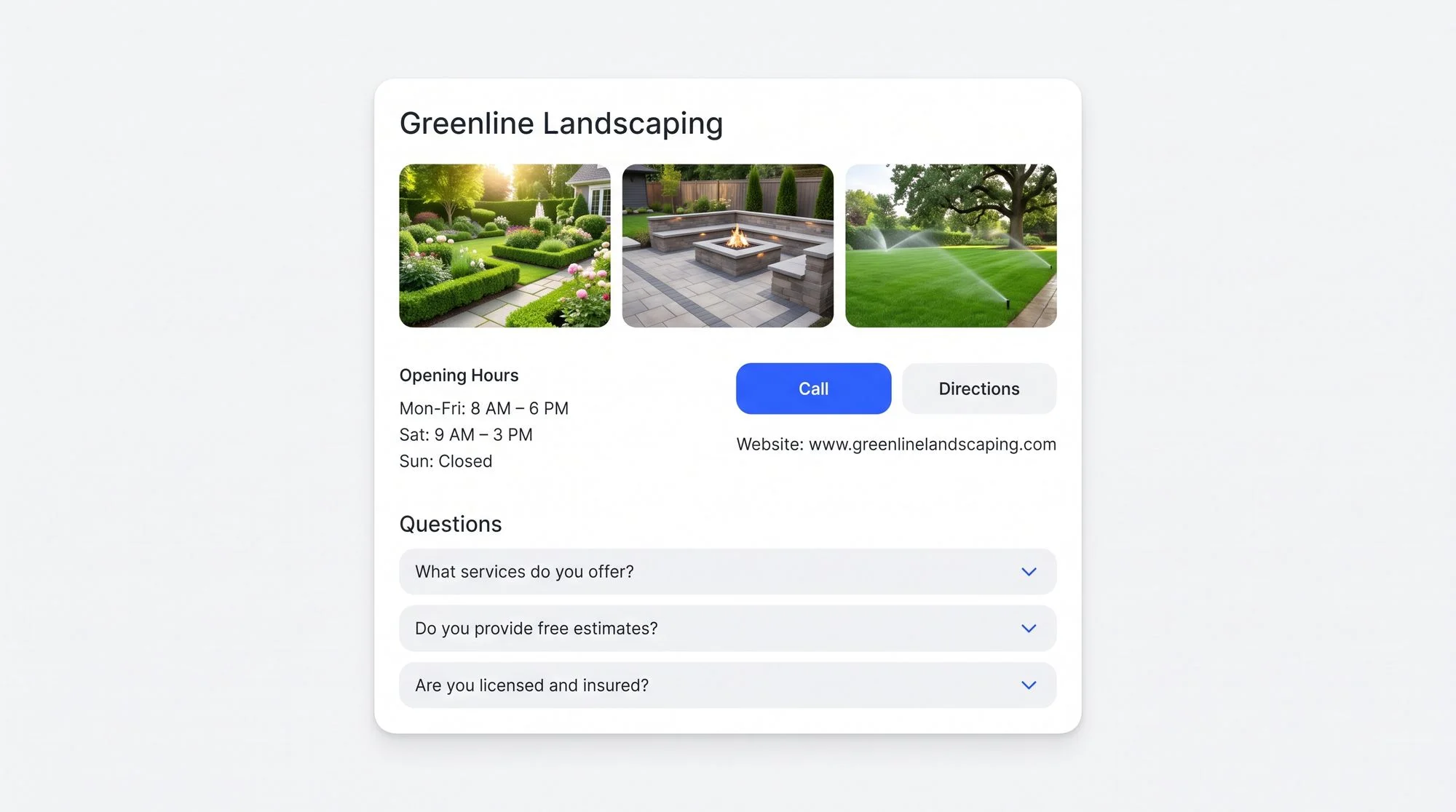
Google profile
A profile that gets the tap.
Painters
Walkthroughs that never close, color choices lost in texts and hours past the bid.
Free 20-minute call. No financial records needed.
Updated
A painting company usually loses time chasing color choices and scope notes through texts, money when labor runs past the bid, leads when estimates sit after the walkthrough with no second touch, and visibility when interior, exterior and cabinet work read unevenly online. French Press Labs builds estimate follow-up that stops on reply, a job record holding colors, sheens and scope, a crew schedule that handles weather, and an owner view of hours against bid. It starts with a free 20-minute fit call, then a Business Performance Diagnostic of your bids and jobs.
house painters near me
interior painting near me
exterior house painting near me
cabinet painting near me
commercial painting contractor near me
People type these into Google and ask them of AI assistants. What happens after they reach you matters just as much.
Where it slips

Color codes, sheens, trim choices and touch-up lists travel by text between the homeowner, the estimator and the crew lead, and someone retypes them for every job.

Prep, extra coats and surprise repairs push labor past the bid, and nobody compares hours to the estimate until the job is long done.

You walked the house, measured every room and sent the bid, then nobody touched it again while the homeowner waited on two other painters.

Your Google profile, reviews and AI answers may show you as a house painter when the work you want is cabinets, exteriors or commercial repaints.
Part of Demand
Assistants name local businesses in their answers. Being named is one part of Demand, and only pays off when the inquiry reaches a person.
Example of the answer a customer could get, with your business named in it.
One business, three layers
We start with the leak that costs you the most and build the fix where it belongs. A website is one part of Demand, not the whole answer.
Estimate requests land in one place with room counts, surfaces and photos. Your Google profile, reviews and AI search answers point to the jobs you want more of, and a website when a rebuild is justified shows past work by type.
Bids get follow-up that stops when the homeowner replies. Colors, sheens and scope stay attached to the job so the crew lead sees the same thing the customer approved, and rain days reshuffle one schedule.

You see hours against bid by job type, open estimates by age and which kinds of work actually leave margin.
Runs in our own business
Follow-up that stops the moment a customer replies runs in our own business, and it fits the bid a painter sends after a walkthrough.
Part of Demand
When someone nearby searches “house painters near me”, your name should be one they see, and the inquiry should land with a person.
Example of what nearby customers would see, with your business in the results.
How it starts
A free fit call first. Then the Business Performance Diagnostic looks inside your records and workflows and hands you a baseline and a ranked list of fixes to keep.
Estimates sent and their outcomes. Crew timesheets by job. Paint and material purchases by job. Invoices split by interior, exterior, cabinets and commercial.
Walkthrough to bid to signed job. Color selection to crew start. Final walkthrough to touch-ups to payment.
We name the three painting companies that show up first when homeowners near you search for interior, exterior or cabinet painting, and compare how AI assistants describe their work.
Concepts we made to show the idea. Not client work.
Google profile
The homeowner collects a few estimates and stalls. The painter who checks back with a useful answer is the one still in the running.
A sheen change approved by text never reaches the crew lead. Repainting a wall costs more than tracking the choice.
Extra prep and a third coat feel small on the day. Across a season they decide whether a job type is worth bidding.
Exterior work shifts and interior jobs get pulled forward by phone. Without one schedule, customers hear about changes last.
Send a short check-in after the bid that answers a likely question, such as prep or timing, then space a few more out. Stop the sequence the moment the homeowner replies. A person approves the messages, so the voice stays yours. Most stalled bids need a reason to reply, not pressure.
Track labor hours against bid by job type, open estimates by age and margin by interior, exterior and cabinets. Those show which work to chase and which to price higher. We build the view from your bids, timesheets and invoices. Anything we cannot trace to a record is labeled not established.
Attach colors, sheens and scope to the job record, not to a text thread. The crew lead sees what the customer approved, and any change is logged there too. That cuts repaints and arguments at the final walkthrough. It also gives you a record for touch-ups years later.
Usually prep, repairs or extra coats that the bid did not price. Comparing timesheets to bids by job type shows which ones run long again and again. That points to a pricing fix or a better walkthrough checklist. The diagnostic does that comparison from your own records.
Make sure your Google profile, reviews and site describe the specific work you want, with real project examples. AI assistants tend to repeat what they can find and confirm about a business. We check how they describe you now next to the painters around you. Results depend on many factors, so we report what changed rather than promise rankings.
It begins with a free 20-minute fit call where we name your competitors and choose one problem worth looking at. If it fits, the Business Performance Diagnostic maps how bids and jobs move through your business. You get a baseline, ranked fixes and a first build roadmap to keep.


