



Follow-up
Follow-up that runs on its own.
Movers
Estimates shopped against other movers, date changes and crews scheduled from memory.
Free 20-minute call. No financial records needed.
Updated
A moving company usually loses time rebuilding inventories and crew schedules by hand, money when moves run long against the estimate, leads when quote requests wait while the customer asks other movers, and visibility when licensing and move types read unevenly online. French Press Labs builds estimate follow-up that stops on reply, one move board from booking to delivery, a claims tracker, and an owner view of hours against estimate. It starts with a free 20-minute fit call, then a Business Performance Diagnostic of your estimates, schedules and move records.
local movers near me
long distance moving company near me
apartment movers near me
packing services near me
movers with storage near me
People type these into Google and ask them of AI assistants. What happens after they reach you matters just as much.
Where it slips

Inventory lists, stair and elevator notes and crew assignments get rebuilt every time a customer moves the date, often by the one person who knows the board.

A short estimate turns into a long day, packing materials go unbilled and the gap only shows up when the month closes.

People request quotes from several movers the same night, and whoever answers first with a clear estimate usually books the date.

Your license, insurance, service area and local versus long-distance work read differently across Google, review sites and AI answers, and nervous customers notice.
Part of Demand
Assistants name local businesses in their answers. Being named is one part of Demand, and only pays off when the inquiry reaches a person.
Example of the answer a customer could get, with your business named in it.
One business, three layers
We start with the leak that costs you the most and build the fix where it belongs. A website is one part of Demand, not the whole answer.
Quote requests from your site, phone and listing sites land in one queue with move size, date and photos captured up front. Your Google profile, reviews and AI search answers show licensing and the moves you want more of, with a website when a rebuild is justified.
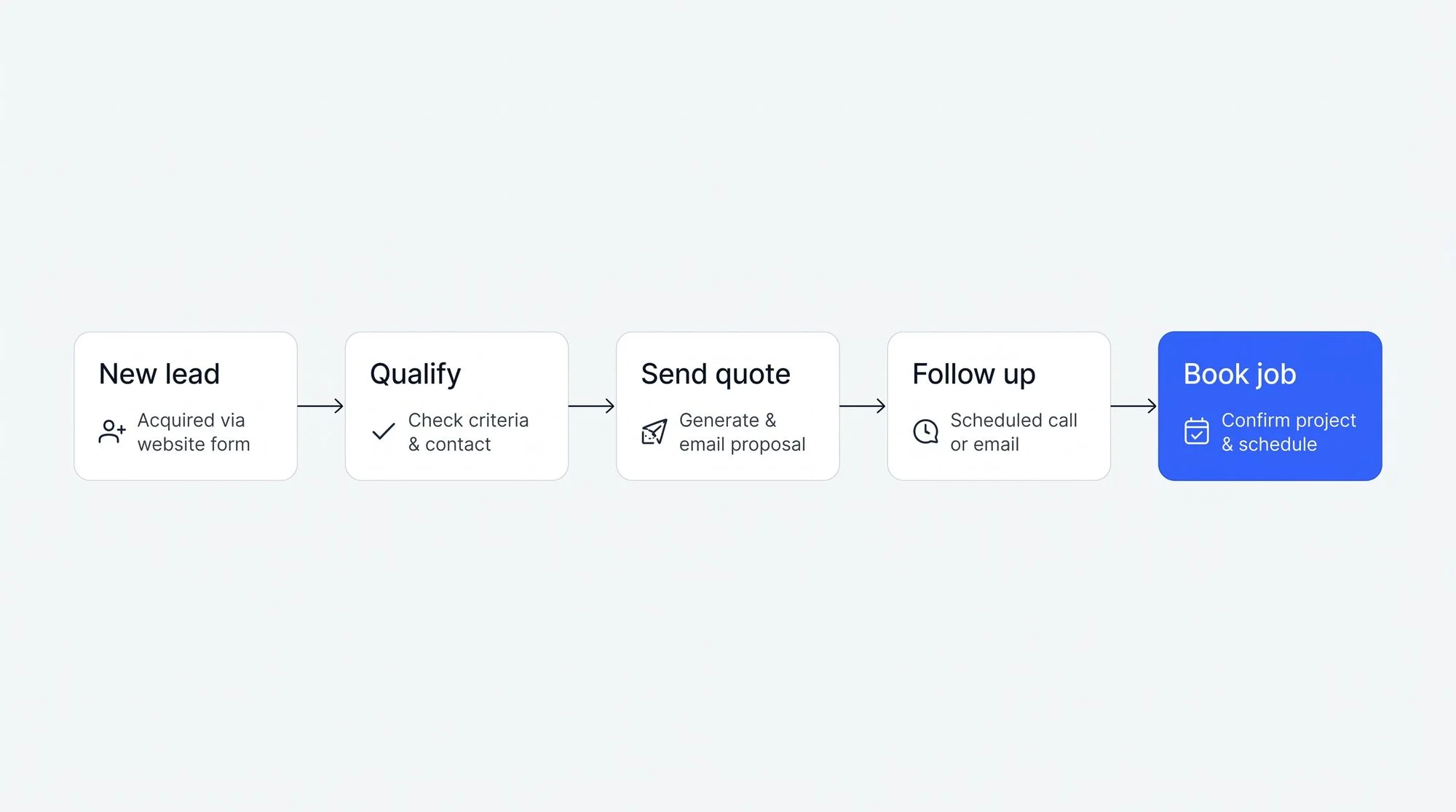
Estimates get follow-up that stops the moment the customer answers. Each booked move sits on one board from survey to truck to delivery, and damage claims are tracked until they close.

You see booked moves by week, actual hours against estimated hours, claims open and which lead sources book rather than just ask.
Runs in our own business
A board that follows every job from order to shipping label runs in our own business, and a move from booked date to delivered boxes follows the same pattern.
Part of Demand
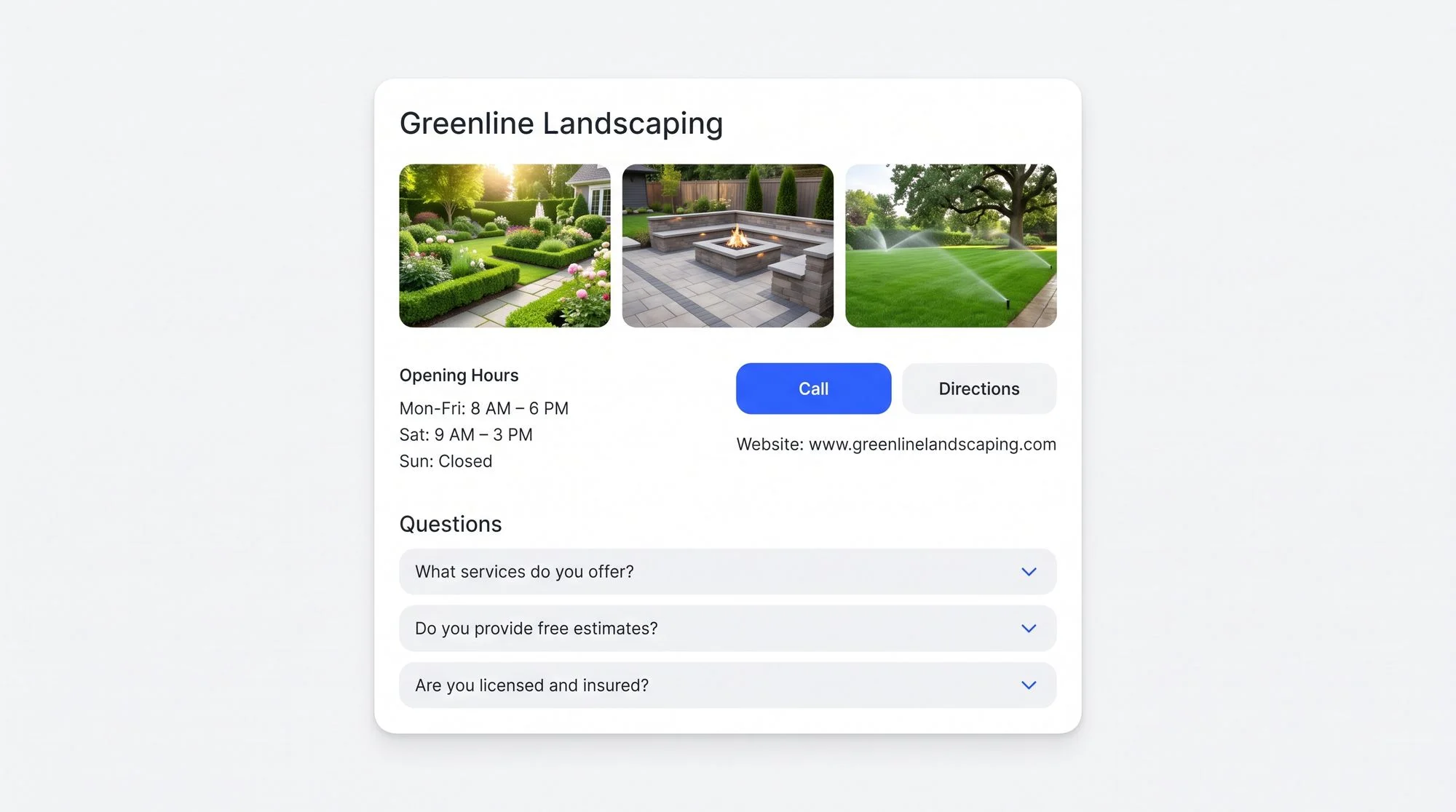
When someone nearby searches “local movers near me”, your name should be one they see, and the inquiry should land with a person.
Example of what nearby customers would see, with your business in the results.
How it starts
A free fit call first. Then the Business Performance Diagnostic looks inside your records and workflows and hands you a baseline and a ranked list of fixes to keep.
Quote requests and their response times. Estimates with their final invoiced totals. Crew timesheets by move. Damage claims and how they closed.
Quote request to booked date. Booked move to crew and truck assignment. Damage report to claim closeout.
We name the three movers that come up first for local and long-distance searches in your area, compare how fast and clearly they quote in public, and see how AI assistants describe them.
Concepts we made to show the idea. Not client work.
Follow-up
Google profile
Reviews
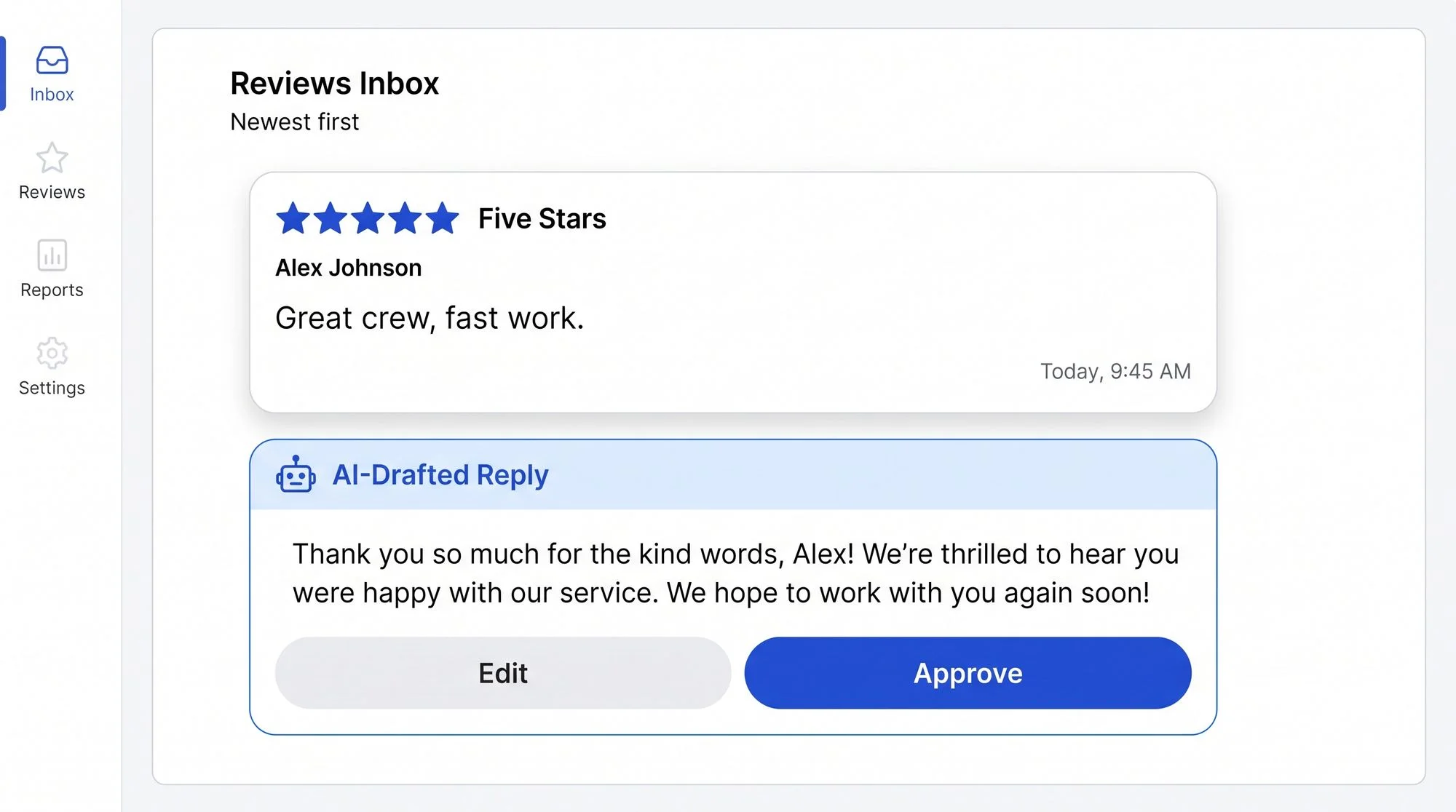
The customer asked three movers on Sunday night. By the time the estimate is ready, someone else has the date.
One customer pushes a week and the crew and truck plan has to be rebuilt by hand. Mistakes show up as a short crew on move day.
Moves that run past the estimate get absorbed and forgotten. Without a look at hours against estimate, the same kind of job keeps losing money.
A scratched dresser sits in an inbox while the customer waits. Slow claims turn a good move into a bad review.
Pull every quote request into one queue and send a reply right away that asks for the details your estimator needs. Follow up on a schedule until the customer answers, then stop. Speed matters because most customers ask several movers at once. A person still writes or approves the actual estimate.
Track booked moves, actual hours against estimated hours, open damage claims and win rate by lead source. Hours against estimate is usually where quiet losses hide. We build the report from your own estimates, timesheets and invoices. It shows you which move types to price differently.
Keep crews, trucks and moves on one board so a date change updates everything at once. The office should see conflicts before the morning of the move, not during it. Where your moving software allows, we connect the board to it instead of replacing it. The point is one schedule everyone trusts.
Usually because the estimate misses stairs, long carries or packing that only shows up on the day. Better intake with photos and a short list of questions closes much of that gap. Comparing estimates to timesheets by move type shows where the guesses are off. That comparison is part of the diagnostic.
Give each claim an owner, a status and a next step from the day it is reported. Customers mostly want to know someone is handling it. A simple tracker tied to the move record keeps photos, notes and the outcome together. It also shows which crews or move types produce claims.
Book a free 20-minute fit call. We look at your AI visibility snapshot, name the movers you compete with and pick one problem worth looking into. If it is a fit, the Business Performance Diagnostic looks inside your estimates, schedules and records. You keep the baseline, ranked fixes and roadmap whether or not we build them.


