




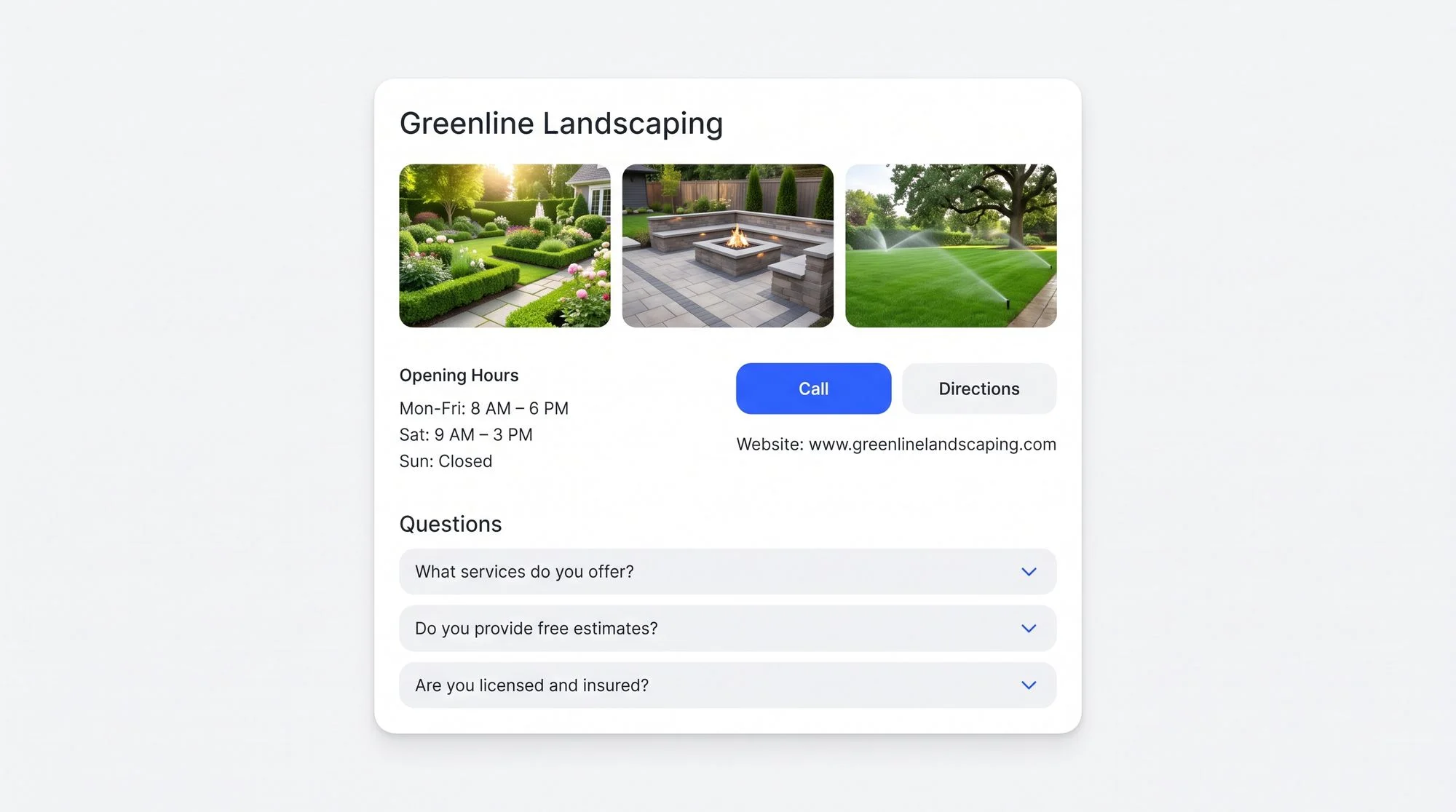
Google profile
A profile that gets the tap.
Contractors
Bids, subs, change orders and job costs that arrive too late.
Free 20-minute call. No financial records needed.
Updated
A general contractor usually loses time rebuilding sub schedules and client updates from text threads, money in change orders nobody bills and job costs that land after closeout, leads when estimates go out with no follow-up, and visibility when project types and past work read unclear online. French Press Labs builds estimate follow-up that stops on reply, a change order log tied to billing, a job board from bid to closeout, and a job cost versus estimate dashboard. A free 20-minute fit call comes first, and the Business Performance Diagnostic comes next.
kitchen remodel contractor near me
ADU builder near me
bathroom remodel near me
home addition contractor near me
licensed general contractor near me
People type these into Google and ask them of AI assistants. What happens after they reach you matters just as much.
Where it slips

Sub schedules, selections and client questions get pieced back together from texts, voicemails and email chains, usually by the owner at night.

Verbal change orders get built and never billed, and job costs show up after closeout, too late to correct the next bid.

Estimates go out and wait, and serious remodel inquiries sit in the same pile as people who only wanted a ballpark.

Kitchens, additions, commercial build-outs and the towns you work in read differently across Google, Houzz and AI answers.
Part of Demand
Assistants name local businesses in their answers. Being named is one part of Demand, and only pays off when the inquiry reaches a person.
Example of the answer a customer could get, with your business named in it.
One business, three layers
We start with the leak that costs you the most and build the fix where it belongs. A website is one part of Demand, not the whole answer.

Inquiries get sorted by project type, rough budget and timing, so the good ones get a fast call. Your Google profile, reviews, project photos and AI search answers show the work you actually want.
Every estimate gets follow-up, every change order is logged with a price and a signature, and each job moves from bid to permit to closeout on one board.

You see job cost against estimate while work is still running, unbilled changes and win rate by project type.
Runs in our own business
Follow-up that stops on a reply and a board that tracks each job to the end both run in our own business, and they map closely to bids and job tracking for a contractor.
Part of Demand
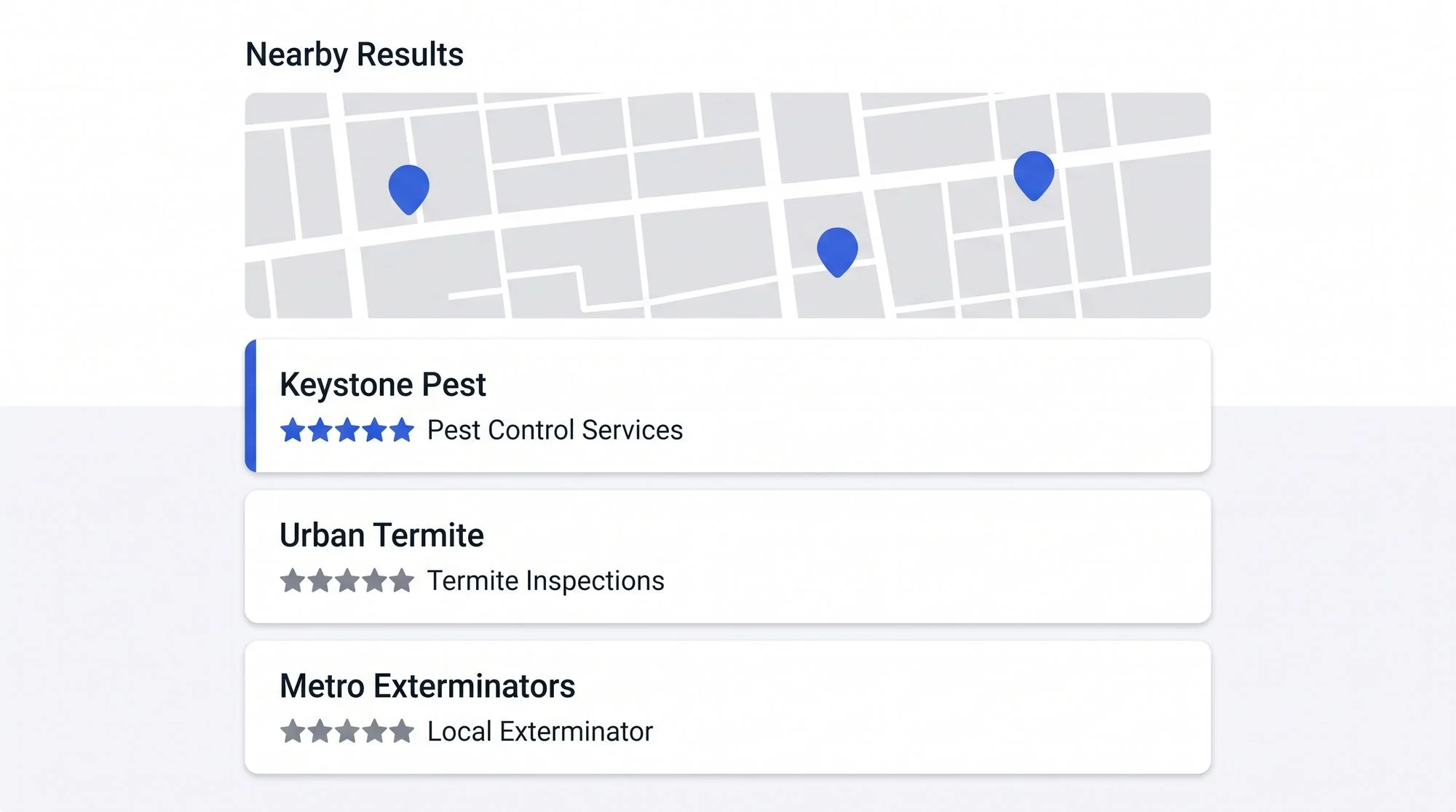
When someone nearby searches “kitchen remodel contractor near me”, your name should be one they see, and the inquiry should land with a person.
Example of what nearby customers would see, with your business in the results.
How it starts
A free fit call first. Then the Business Performance Diagnostic looks inside your records and workflows and hands you a baseline and a ranked list of fixes to keep.
Estimates and bids with outcomes. Change orders and their billing status. Job cost reports and supplier invoices. Sub schedules and sub payments.
Inquiry to signed contract. Change order request to invoice. Final walkthrough to closeout and payment.
We name the contractors who come up first for the project types you want in your area, then compare their reviews, project proof and the way AI assistants describe them.
Concepts we made to show the idea. Not client work.
Google profile
Reviews

Search
A client asks for one more outlet or a wider door, the crew does it, and the change never reaches the invoice.
Supplier invoices and labor land long after the job, so the next bid gets priced on the same guess.
The estimate goes out, the client goes silent, and nobody owns the second call.
Every schedule, selection and sub question routes through one phone, so the business stalls when the owner does.
Log every change the moment it is agreed, with a price and a client signature, and tie it straight to billing. A change done on a handshake is the one that rarely gets paid. Keep the log on the same board as the job so the office sees it before the final invoice. We build that log to work from a phone on site.
Track job cost against estimate, unbilled change orders, and cash collected against cash spent, job by job. Add bid win rate by project type so you know which work to chase. Seeing it during the job is what gives you room to adjust. We build the view from your estimating and accounting records where those systems allow it.
Send a short, specific check-in soon after the estimate, then one or two more that carry something useful, like a schedule opening or a material update, and stop as soon as the client replies. Give every estimate an owner so none of them drift. We build the sequence so a person approves each message before it goes.
Ask the right questions before the site visit: project type, rough budget, timing and whether they own the property. Sort inquiries by those answers so serious projects get a fast call and the rest get a helpful reply. It saves the owner from driving to walkthroughs that were never going to sign. We set up the intake and routing around the work you want more of.
Begin with a free 20-minute fit call about your contracting work. We name the contractors who win the searches you care about, look at your AI search snapshot and agree on one problem worth investigating. The Business Performance Diagnostic then looks at your bids, change orders and job costs. It hands you a baseline and a ranked roadmap that stays yours.


